
While election posters battle for space on lampposts and your feed is overflowing with party leader debates, opinion polls, and political promises, we're taking a step back. Because there are people who aren't waiting for Christiansborg to figure it out. They're already taking action.
One of them is Jannik Seslef from Assens Municipality.
We know what you're thinking. Right now, everything in Denmark revolves around the election on March 24. We promise we'll come back to that. But this time, we also want to tell you a story about a municipal project manager who has done something that politicians, experts, and commissions have been struggling with for decades: he has gotten people to work together. Voluntarily.
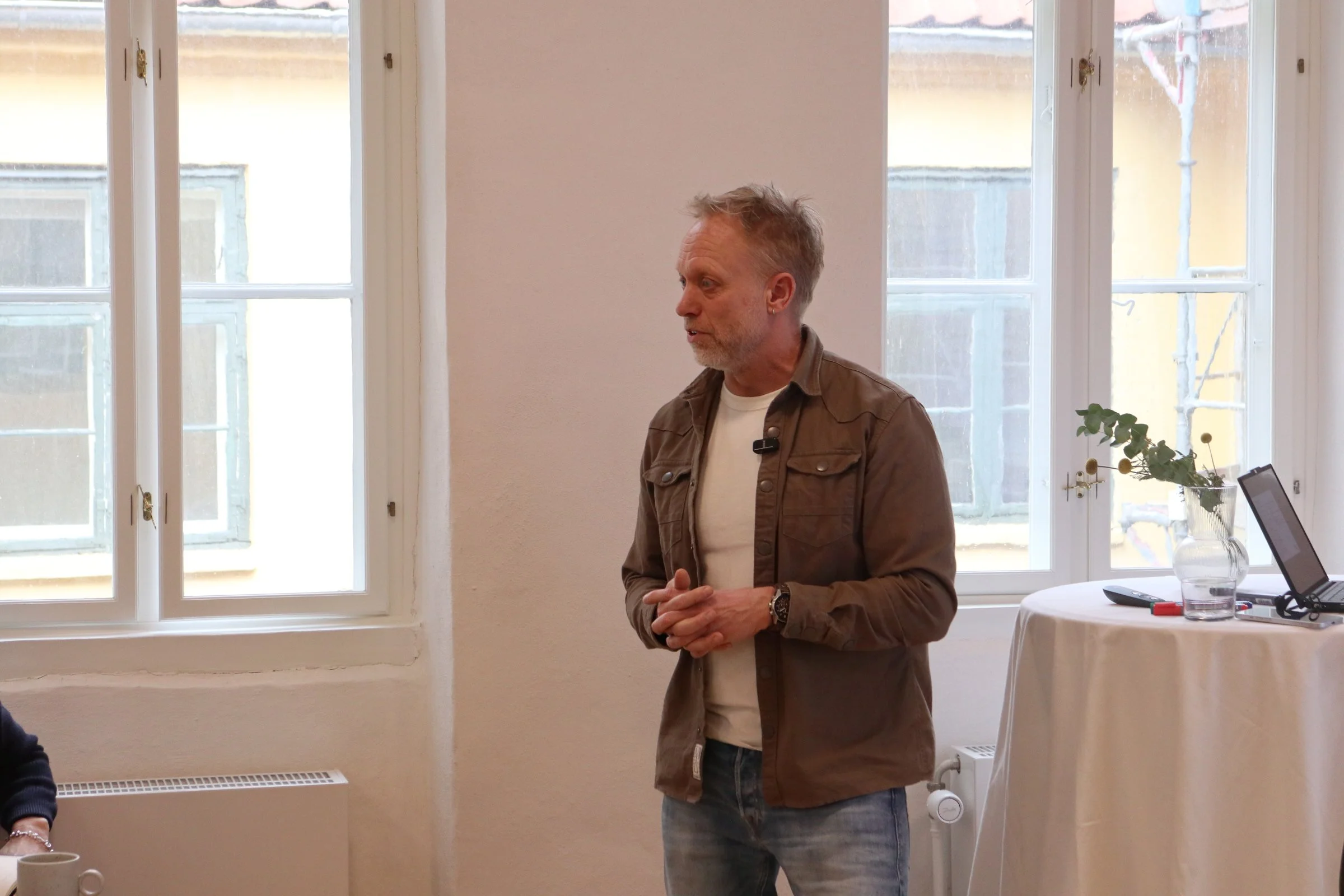
The man who turned the manual upside down
Jannik Seslef is a project manager in the Environment and Nature Department of Assens Municipality. Since 2015, he has been working on the removal of low-lying land. This involves converting drained agricultural land into wetlands that can reduce nitrogen emissions, increase biodiversity, and store CO2. It may sound like a technical exercise. But in reality, it is one of the most political tasks in Danish local politics.
Just imagine: You have to tell farmers that their land needs to be converted. That the field their grandfather drained is now to be a wetland. That it is for the sake of the climate and the marine environment. Traditionally, municipalities have done this by coming up with a finished plan and then presenting it to the landowners. Here is what will happen to your land. Thank you for your attention.
Jannik did the opposite.
The Assens model: Ask first, plan later
Instead of presenting a finished plan, Jannik invites the landowners in right from the start. Before a single line has been drawn on a map. Before any decisions have been made. He sits down with them and asks: What do you want to do with your land? What are your dreams? What are your concerns?
It sounds simple, but it is a radical departure from how public projects are normally run. The Assens model, as the approach has been dubbed, is based on a few simple principles: early involvement of landowners, voluntary participation, and a dialogue-based approach that takes local wishes and needs as its starting point. The key is that landowners are not presented with a fait accompli, but are invited to be co-creators of the solution.
And it works. Assens Municipality has launched projects covering thousands of hectares. The method won the municipalities' climate award in 2024. It is now used in municipalities throughout Denmark and has even reached Sweden.
When climate is a huge problem
For us at INVI, Jannik's story is interesting because it illustrates something fundamental about wicked : they cannot be solved from behind a desk.
Climate adaptation and the removal of low-lying land meet all the criteria for a complex problem. There are many stakeholders with conflicting interests. Farmers who fear for their livelihoods. Neighbors who are concerned about flooding. Nature organizations that want more biodiversity. Municipalities that must deliver on national targets. And a Christiansborg that has promised 140,000 hectares of land removal by 2030 – without necessarily asking whether this is feasible in practice.
Jannik himself has pointed out this paradox. In a debate article in Altinget in January 2026, he warned that the green tripartite agreement is based on unrealistic assumptions. In Assens Municipality alone, projects covering approximately 6,000 hectares are to be implemented in five years. Even an award-winning model cannot deliver at that speed, he wrote.
It is precisely this type of gap between political ambitions and practical reality that INVI is working to bridge.
What Christiansborg can learn from Assens
Jannik Seslef is a textbook example of a frontline practitioner who has developed his own method for tackling a difficult problem. And there is much to learn from the Assens model:
Dialogue before decision-making. The Assens model starts with listening. It is about turning the traditional top-down approach on its head. Gathering knowledge from the practitioners who work in the profession every single day.
Voluntary participation and ownership. Jannik insists on voluntary agreements with landowners. This is based on the recognition that people must own the solution if it is to be sustainable. According to him, this is the best way to achieve co-creation.
Local adaptation. The Assens model adapts each project to the specific area and the specific people. National reforms must be adapted to local realities. This is a break with the one-size-fits-all approach.
Action over analysis. Jannik has also developed a "fast-track" model that makes it possible to establish wetlands more quickly by cutting out unnecessary bureaucracy. When we try to tackle complex societal challenges, we cannot just analyze—we must dare to act and experiment.
In fact, he has also tested the method in a previous project. With success. The same dialogue-based approach is the foundation for a six-year research project on weed cutting in watercourses, carried out in collaboration with Aarhus University, WSP, and HedeDanmark with a total grant of DKK 8 million.
The starting point was once again to listen to users' concerns – in this case, farmers who needed to divert water away from their fields and authorities who had to meet environmental targets. Over 130 landowners voluntarily participated in trials on 65 watercourse sections, and the results were groundbreaking: it is possible to cut vegetation and improve biodiversity at the same time. The project has since changed vegetation cutting methods in small watercourses in a large number of Danish municipalities.
Jannik's approach resembles INVI's in several respects. At INVI, we believe that wicked require us to listen to those on the front line. Political solutions are better when they are based on the experiences of practitioners – not the other way around. That is why Jannik's work is also an inspiration to us.
Back to the election (just a little)
In three weeks, Denmark will elect a new government. There will be plenty of talk about that. But perhaps it is worth remembering that regardless of who wins, the implementation of the green tripartite agreement, healthcare reform, and all the other major plans will still have to succeed in the real world. By people like Jannik Seslef.
And if there is one thing his story shows, it is that the best solutions do not necessarily come from a government department. They come when someone sits down, listens, and asks: What do we need here?
Honestly, it could also be a good principle for an election campaign.
Jannik Seslef recently gave a presentation at one of INVI's masterclasses on his approach to solving complex challenges in practice. If you would like to know more about the Assens model, you can read more at assens.dk/assensmodellen.
And if you want to follow the election after all, we've got you covered. Keep an eye out for INVI's election special of our podcast KOMPAS over the next few weeks.