
Dealing with wicked in practice
- Tools for problem-solving, alliance-building, implementation, and learning loops in community-oriented organizations
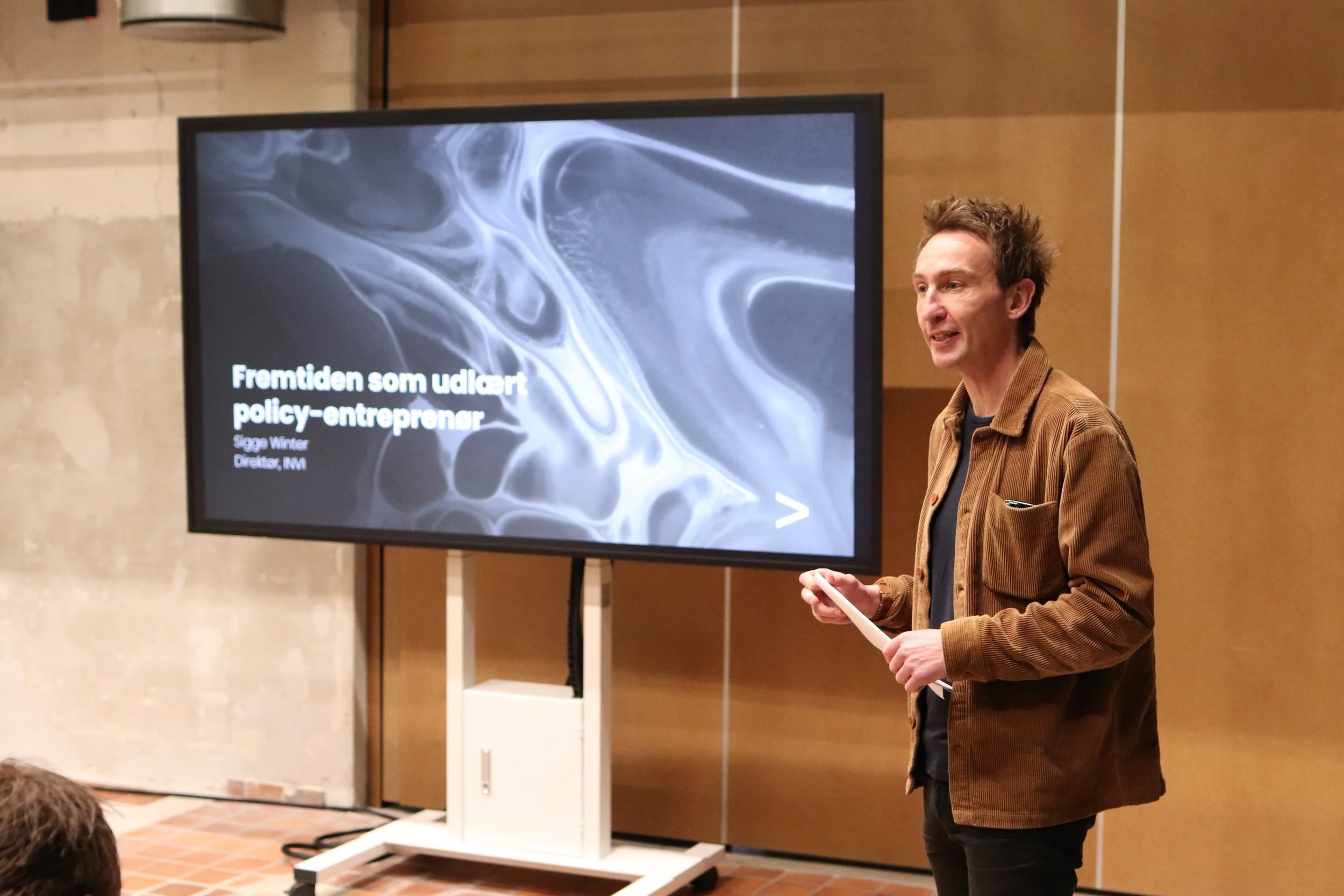
The program was previously known as “Masterclass in wicked for Policy Entrepreneurs.”
Location
Copenhagen
Duration
5 modules
Price
24,900 DKK, excluding tax
Next team
Fall 2026: October 1, 2026 – January 21, 2027
As a society, we face a number of challenges that, in the words of the Reform Commission, are “recognized, attempted to be resolved, yet remain unresolved.” Issues such as climate change, health inequities, mental distress, and spiritual and material armament, to name just a few. Efforts are numerous, but their impact is uneven, and the problems span disciplines, levels of government, and organizational boundaries.
“Handling wicked in Practice” is INVI’s flagship course—a well-established masterclass program designed for those who work on particularly complex societal problems and want concrete tools to understand and address them in collaboration with others.
You will be equipped to tackle complex problem-solving within and at the boundaries of your organization, from establishing a framework to implementation. You will learn to institutionalize collaboration, continuous learning, and feedback, thereby avoiding isolated efforts and one-off initiatives.
Who is taking the course?
This course is designed for those who work to develop, implement, or coordinate initiatives that address complex or wicked , and who find that conventional approaches and methods are insufficient.
For example, you could be:
Specialist Consultant, Senior Consultant, Analysis or Development Consultant
team coordinator or program manager
employed by a government agency, a ministry, a municipality, a region, or a political party
an employee of a foundation, advocacy group, civil society organization, or public-sector entity
What the participants have in common is that they are working on socially significant challenges—both political and organizational—where conventional management and project tools are insufficient.
Benefits for you and your workplace
Your workplace is getting a new colleague who:
will return home with a concrete action plan for addressing a complex societal challenge that your organization is tackling
can organize and ensure progress in complex initiatives where the outcome is not known in advance and where ongoing adjustments and collaboration across stakeholders, disciplines, and levels of implementation are required
is familiar with modern and well-established approaches from Denmark and abroad for addressing problems that are difficult to define, including the ethical use of artificial intelligence to support complex problem-solving
can frame issues and integrate learning loops within a political context, and translate this into appropriate decision-making frameworks and solution strategies
has a keen understanding of the agendas and dynamics across the Danish political landscape and can translate these into action within their own organization
has the tools to map out different contexts and perspectives across disciplines and levels of implementation, and can engage and mobilize key stakeholders so that initiatives and policies become more feasible and effective
What others are saying about the course

“It has made me realize the importance of insisting on continuing to investigate the causes of problems before moving on to the solutions. Now I work for the government—very close to the political level—and there’s a huge focus on solutions and taking action, which doesn’t always leave much time for us to also look at the causes so we can find better solutions.”
- Maja Lykke Lorenzen, Chief Consultant, Danish Energy Agency
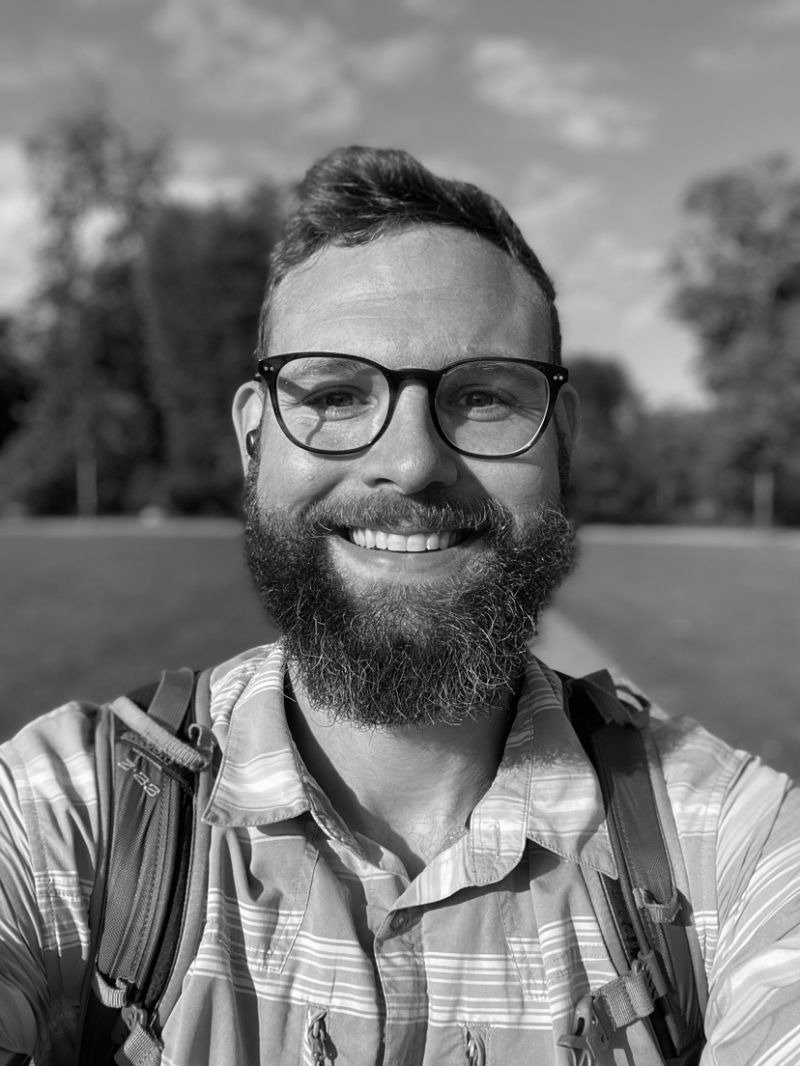
"My advice to you starting out is to leave the pre-baked solutions at home. Go into it with an open mind. You'll gain language and tools - and a community of entrepreneurs you can build alliances with."
– Magnus Runge Holmegaard, Project Manager, DGI Greater Copenhagen

"I have gained an eye for the whole challenge of driving change. From the exploratory phase all the way to the evaluation, and I'm now equipped to work iteratively with my challenges."
– Mia Nørlund, architect and urban planner, Grandville
“Next week, we’re holding a management seminar in the municipality where I work, where we’ll be looking at the challenges of the coming decade and how we can address them systematically. We’ve decided to use the INVI toolkit to explore how we can tackle this together.”
– Anders Munch Skovgren, Director of the Department of Culture, Leisure, and Youth Affairs, Frederikssund Municipality
Watch the video below to hear former students talk more about what they gained from the course:
Educators
At our Masterclass, you can learn from a group of experts who have experience tackling wicked in government, civil society, the private sector, and foundations. Meet them here:

Sigge Winther Nielsen (Masterclass manager)
Director of INVI and PhD in political science. Sigge teaches methods for understanding, mapping, and handling wicked across sectors. With experience from research, central administration, and the media world, he ties theory and practice together and shows how to translate complex insights into concrete decisions, processes, and collaborations.

Nina Smith
Professor of Economics and former chair of the Reform Commission. Nina teaches how complex social problems develop over time and how economic incentives, institutions, and stakeholder motives influence the possibilities for change. She contributes an analytical perspective on why well-intentioned reforms often fail and what it takes to create long-term socio-economic impact.

Claus Meyer
Gastronomic entrepreneur, co-founder of Noma, and driving force behind New Nordic Food. He offers a practical perspective on how social and cultural movements arise and how to translate visions into sustainable, concrete practices. Claus contributes his experience in building strong communities and movements that change norms, behaviors, and practices over time.

Vibe Klarup
Secretary General of Amnesty International and former chair of Folkemødet. Vibe teaches how to collaborate in high-conflict environments, mobilize new actors, and build alliances around shared missions. She provides insight into how to create momentum and legitimacy when values, interests, and power are sharply opposed.

Sine Egede Eskesen
Development Director at the Bikuben Foundation. She demonstrates how art, culture, and social initiatives can serve as laboratories for new approaches when wicked require radical changes and longer time horizons. Sine contributes her experience in working experimentally with change, where results cannot be measured in the short term.

Sofie Burgos-Thorsen
Head of Analytics at INVI. Sofie specializes in collective intelligence, artificial intelligence, decision-making processes, and learning in complex systems. She teaches how to translate data, experiences, and stakeholder perspectives into clear problem understandings and robust decision-making frameworks that can be applied in practice.

Kristine Fisker (Masterclass facilitator)
Masterclass facilitator and program director for process design, cross-functional collaboration, and learning at INVI. Kristine connects participants’ own challenges with the models and methods used in the program, ensuring that the learning is concrete and practical. She teaches practical techniques for driving processes, fostering collaboration, and developing action plans that can be directly applied within participants’ own organizations.
Program
The course is built around three elements:
1. training is based on a curriculum developed by INVI that draws on research and practice from both Denmark and abroad.
2. Your own real-world situation, to which you are continually asked to apply theory and methodology. Based on this, you will ultimately create a pitch in which you apply what you have learned to your own situation. You will present the pitch during the final module.
3. Concrete examples of how others work with wicked problems, both from the public administration, the private sector and civil society.
-
Fall 2026: October 1
9:15 a.m. – 4:00 p.m.
When faced with wicked , it is easy to lose heart. There are many factors at play, and there is not always agreement on how to solve them. That is what makes the problem wicked.
In order to tackle a wicked problem, it is crucial that the actors involved have a common language for the problem and understand how it is wicked, so that you can start in the right place. In this module, we focus on understanding the problem. We also delve into the atlas of tools and examine how to deal with uncertainty about the causes wicked using collective intelligence.
In the first module, you will also be introduced to INVI's Model for wicked , developed in collaboration with practitioners and researchers at the University of Copenhagen and based on collective intelligence. The model helps you to understand your wicked in depth, create common ground with your partners, and choose an appropriate approach. We answer:What characterizes your problem?
Why is it difficult to manage?
How does the problem challenge the methods and tools you know?
How can you use collective intelligence to navigate uncertainty about the causes of the problem?
-
Fall 2026: October 21
9:15 a.m. - 4:00 p.m.
"Recognized, tried to solve, unsolved." This is how the Reform Commission describes the challenge of the 43,000 young people who are neither in employment nor in education. These young people often struggle with multiple complex challenges, and despite decades of reform policies and initiatives, no one has managed to help this group. As we will see in this module of the masterclass, this problem - like many other wicked problems - is characterized by a lack of clarity about obvious solutions to the problem.
Because with wicked problems, good solutions can rarely be calculated at a desk, decided by legislators, dictated by managers or analyzed by experts. Instead, we need to take a trip to the lab. Exploring, developing and testing new solution hypotheses - together and across the implementation chain. Instead of rolling out a single chrome-plated reform across the country all at once, initiatives need to be pressure-tested continuously. And often this requires customization options - modules or bricks that can be combined in different ways to match the complexity of the problem and local differences. What is developed and rolled out at a school in Vejen may need a different look and feel to suit a school in Vesterbro.
In the third module of the masterclass, we take a closer look at modular co-creation and how you can combine drive and humility in developing, testing and scaling solutions to wicked problems. Together we ask these three questions:
How can you co-create and put together modules with relevant partners?
How do you make room for continuous iteration and learning in the development and deployment of modular solutions?
How can you use modular co-creation to develop solutions that can be adapted to local conditions without sacrificing cross-learning and scalability?
-
Fall 2026: November 10
9:15 a.m. to 4:00 p.m.
Where does the problem of climate change start and end, and who 'owns' the problem? Is it business, consumers, the municipalities' Technical and Environmental Administration, the government, the European Parliament, or society at large? And what about gender equality or the labor shortage?
wicked problems often cut across sectors and levels and therefore cannot be tackled by one actor alone or with one solution. If a wicked problem is characterized by large scale, there is a need to bring together a wide range of actors who approach the problem from different angles.
In the second module, we dive into a new corner of the atlas of tools for wicked problems. We take a closer look at mission-driven portfolio management and how you can manage scale by mobilizing stakeholders around a common mission and working across existing boundaries:What is the mission for your problem?
Who do you need to mobilize to achieve the mission?
How are the many efforts managed in portfolios?
-
Fall 2026: December 2
9:15 a.m. - 4:00 p.m.
There are issues that we have known about for many years, but which are locked in because of strong interests and major differences in values between groups in society. In other words, there is pronounced conflict. Conflict is typically used as an engine in politically driven organizations: factions work to outline differences and create awareness and debate by drawing the lines of conflict clearly. Conflict is important for democratic dialog and negotiation of the issue. Differences in interests are often legitimate, for example in negotiations between employer and employee.In wicked problems, however, conflict can perpetuate and amplify the problem. It can lead to a narrow, contemporary focus on protecting interests and fighting for short-term gains for the benefit of the few. The problem can become so inflamed that it creates paralysis. One example is the climate crisis, where contemporary interests and large investments in fossil fuel infrastructure lead to tensions that make collective action difficult. To break the pattern, a shift in perspective is needed. We need new visions of the future and bold leadership that dares to empower the players who challenge the status quo.
In the fourth module, we explore systemic change and how you can create the conditions to move your problem to a new place by looking at structures, relationships and mental models. We will explore how radical change is initiated by social movements, levers, system keys, tipping points and a strengthening of the collective imagination in the belief in a better future. Together we investigate:What structures, relationships and mental models are locking the system around your wicked problem?
What 'system keys' can you use to unlock it?
How can we take the long view and strengthen the collective imagination for a better future?
-
Fall 2026: January 21, 2027
10:00 a.m. - 7:00 p.m. (including lunch)
Location: Thoravej 29, Copenhagen N.
In the fifth and final module, we focus even more closely on your specific daily work. Before the module begins, you will have developed an action plan describing how you intend to integrate your new insights into your own practice, or how you have already begun doing so.
You will have the opportunity to both present your own work to the rest of the team and learn from others’ experiences. You will receive constructive criticism and renewed inspiration on how to continue working on your problem.
In addition to feedback from the team, you can also receive comments from a panel of three experienced policy entrepreneurs from the foundation sector, the Danish public administration, and the research community.We estimate that it will take 5–10 hours to develop your action plan, which we hope you will be able to use within your own organization after the masterclass is over.
The module ends with a social program and dinner together.
Price: DKK 24,900 excluding VAT
The price includes light breakfast and lunch during all modules, a closing dinner, the book 'wicked problems' by Sigge Winther Nielsen, a compendium and a moleskine notebook.
Discounts
Bring a colleague - discount
If two or three people from the same organization (same EAN / CVR number) participate, each participant receives a DKK 1,000 discount. Contact us for a quote if more than three people from the same workplace want to sign up for the program.Early-bird discount
If you register before June 30, you get an early-bird discount of DKK 2,000.PIP member discount
If you are a member of INVI's Policy Insights Panel, you get a discount of DKK 4,000. Read more about the panel here.
The discounts cannot be combined. If you are eligible for multiple discounts, you will receive the largest one.
Practical information
The course will run in the fall of 2026 (October 1, 2026, October 21, November 10, December 2, January 21, 2027). The masterclass will be held at INVI's premises: Snaregade 10B, 1208 Copenhagen K, except for the last module, which will be held at Thoravej 29, 2400 Copenhagen N.
For questions and further information, write to masterclass facilitator Kristine Fisker at kristine@invi.nu.