Atlas
A toolkit of methods for creating change processes that resolve entrenched problems.
INVI’s Atlas
wicked cannot be solved with standard tools. But there is no universal formula for what works—it depends on what makes your problem so intractable. Is there deep uncertainty about the causes? Uncertainty about the solutions? A problem that spans multiple sectors? Or entrenched interests and deep conflict?
INVI's Atlas is a guide to the major trends in innovative methods that can help you navigate wicked and find the right approach for your specific challenge.
Get started – three steps
-
Assess your wicked using INVI’s Model for wicked —and figure out what makes it so tricky.
-
Review your efforts so far. Have you identified what is actually making the problem difficult?
-
Explore Atlas and start where your problem is most pressing.
Four sets of tools
Atlas isn’t a manual that tells you exactly what to do when faced with a problem. It’s a toolbox that gives you new tools to figure out how to approach it. The four dimensions that INVI often cites as making a problem complex—uncertainty about causes, ambiguity regarding solutions, large-scale stakeholder involvement, and political or value-based conflict—are each linked here to a carefully curated toolbox, containing tools that help you move forward.
We often use Atlas in conjunction with the wicked Model, which helps us analyze which of the four dimensions a problem is particularly complex in. In this way, we combine data-driven mapping with INVI’s Solution Atlas.
Topography
Collective intelligence
When there is uncertainty about the causes.
Traditional analyses and commissions provide valuable insights—but data quickly becomes outdated, and they rarely capture the practical knowledge of those who deal with the problem on a daily basis. Collective intelligence is a more dynamic source: by gathering input from a broad and diverse range of stakeholders, a vivid picture emerges of what actually drives the problem—and what the blind spots are. The method combines qualitative depth with quantitative breadth and can track the problem as it evolves over time.
Laboratory
Modular co-creation
When there is uncertainty about the solutions.
wicked are rarely solved correctly the first time. Instead of betting everything on a single, grand solution, modular co-creation involves breaking the problem down into smaller parts—solution modules—that are developed in collaboration with relevant stakeholders, tested locally, and continuously adapted. This reduces risk, fosters ownership, and creates a foundation for learning across contexts and organizations.
Moon landing
Mission-driven portfolio management
When the problem is large-scale.
When a problem affects many sectors and levels at once, neither central planning nor sector-based management is sufficient. Mission-driven portfolio management brings stakeholders together around a shared, ambitious, and time-bound mission—a “narrow compromise” that many can identify with. During the mission, many stakeholders test different hypotheses through a portfolio of pilot initiatives. This spreads the risk and allows the wicked to be tackled from multiple angles simultaneously.
Utopia
Systemic change
When there is deep conflict.
When a problem is surrounded by entrenched interests and ideological conflict, incremental solutions rarely help. Systemic change is about looking beyond the immediate conflicts of interest and instead envisioning a significantly different future. Using tools such as tipping points, system keys, and foresight, we work with the deep, underlying structures, norms, and power dynamics—the places where real change can be initiated.
Masterclass

Testimonials from past participants
Learn how to use the tools in the toolbox yourself
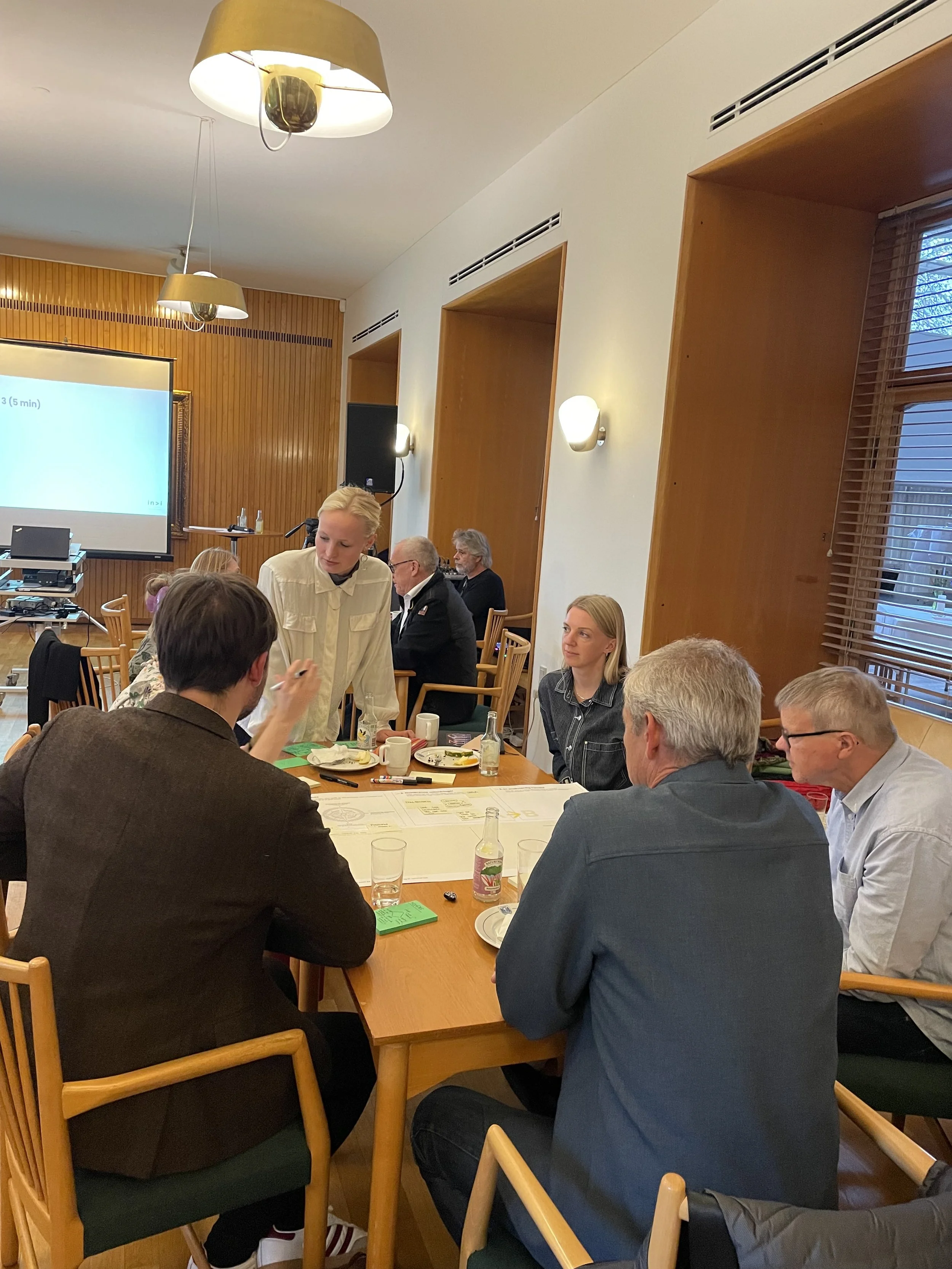
Would you like to put Atlas into practice yourself? INVI teaches the toolkit through a series of masterclasses, where you’ll learn to navigate wicked and match the right methods to your specific challenge. The training is designed for politicians, civil servants, leaders, and others who work with complex societal problems.