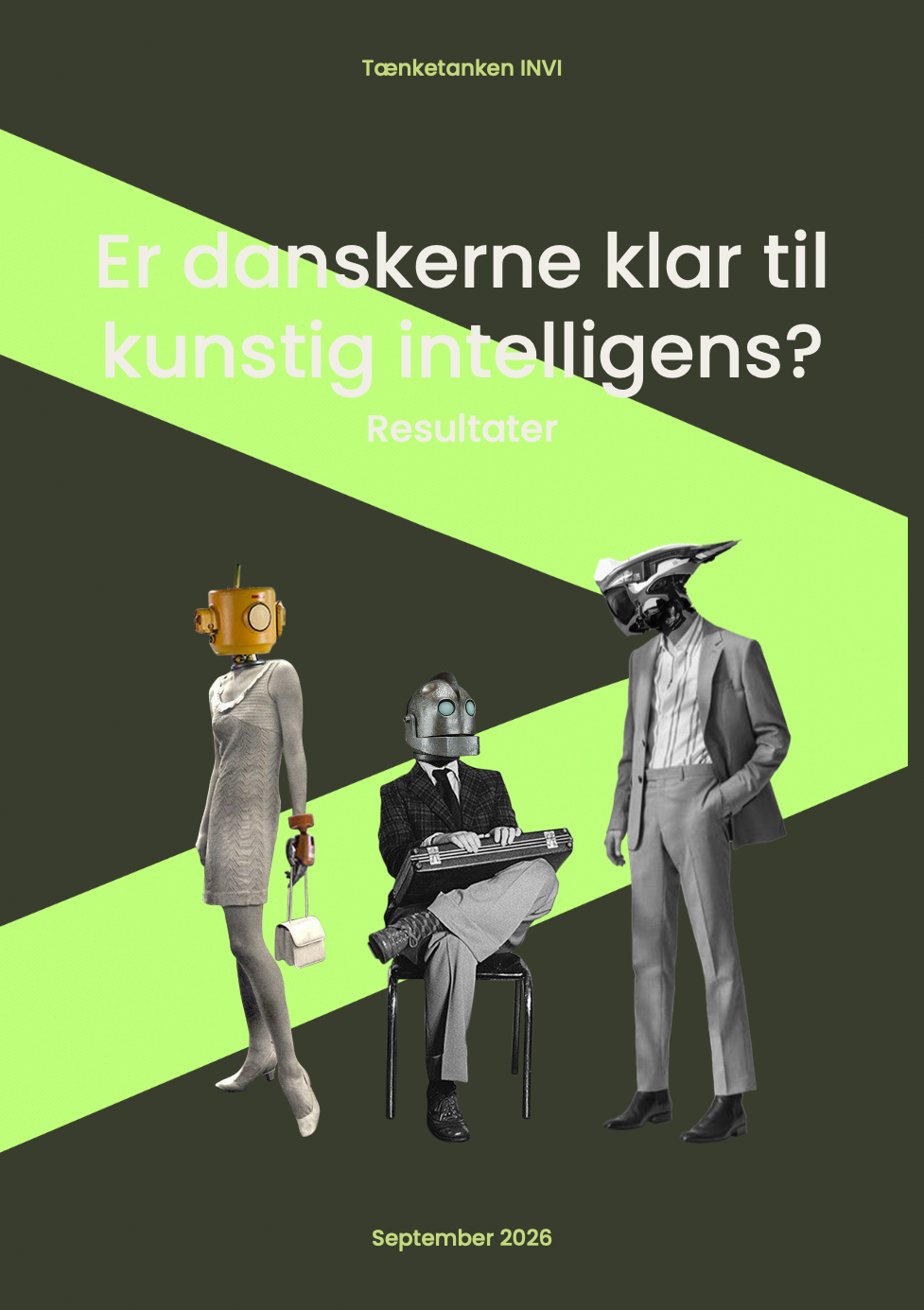
Danes Want Politicians to Regulate AI
Artificial intelligence is advancing too quickly, and AI is making society worse rather than better. That’s the view of a majority of Danes, according to a new study by the INVI think tank. And they expect politicians to take action.
AI has quickly become a part of our schools, workplaces, and everyday lives. The pace of development is so rapid that the discussion about how we will use the technology is lagging behind. To spark that conversation, INVI asked 1,003 Danes how they feel about this development.
67 percent believe that AI is changing society too quickly, and 56 percent believe that AI is generally making society worse.
Danes also have suggestions for what politicians should do. In a future where AI takes over many of the tasks that humans perform today, 60 percent would lower taxes on earned income to make it more attractive to hire people rather than AI. Nearly half would raise the corporate tax rate for AI companies with very high profits, while only one in four opposes this. This stands in contrast to the government, which wants to lower the corporate tax rate.
At the same time, Danes do not want AI to make government decisions on its own, and only 26.5 percent believe that government agencies will be transparent about their use of AI in the future. If the public sector is to use this technology in a way that citizens can trust, a clearer framework is needed.
"I would like to see a cross-functional body—perhaps the Digital Task Force—that can provide a clear legal framework for what is and isn’t allowed. That way, state and local government employees can start testing AI solutions in pilot projects. And then the ethical assessment of whether it’s a good idea to use AI in this or that context would be more closely aligned with real-world practice,” says Sofie Burgos-Thorsen, chief analyst at INVI.
AI is here to stay. But how the technology should be integrated into our work lives, education systems, and healthcare remains a political decision. And Danes want politicians to make that decision.
The survey was conducted by Norstat among 1,003 representatively selected Danes over the age of 18 between August 17 and 21, 2026.