
The great Danish hymn writer Grundtvig was a priest at Vartov Church, a stone's throw from Rådhuspladsen in central Copenhagen. Here he talked about how he regarded community as the central condition for forming both a society and an individual.
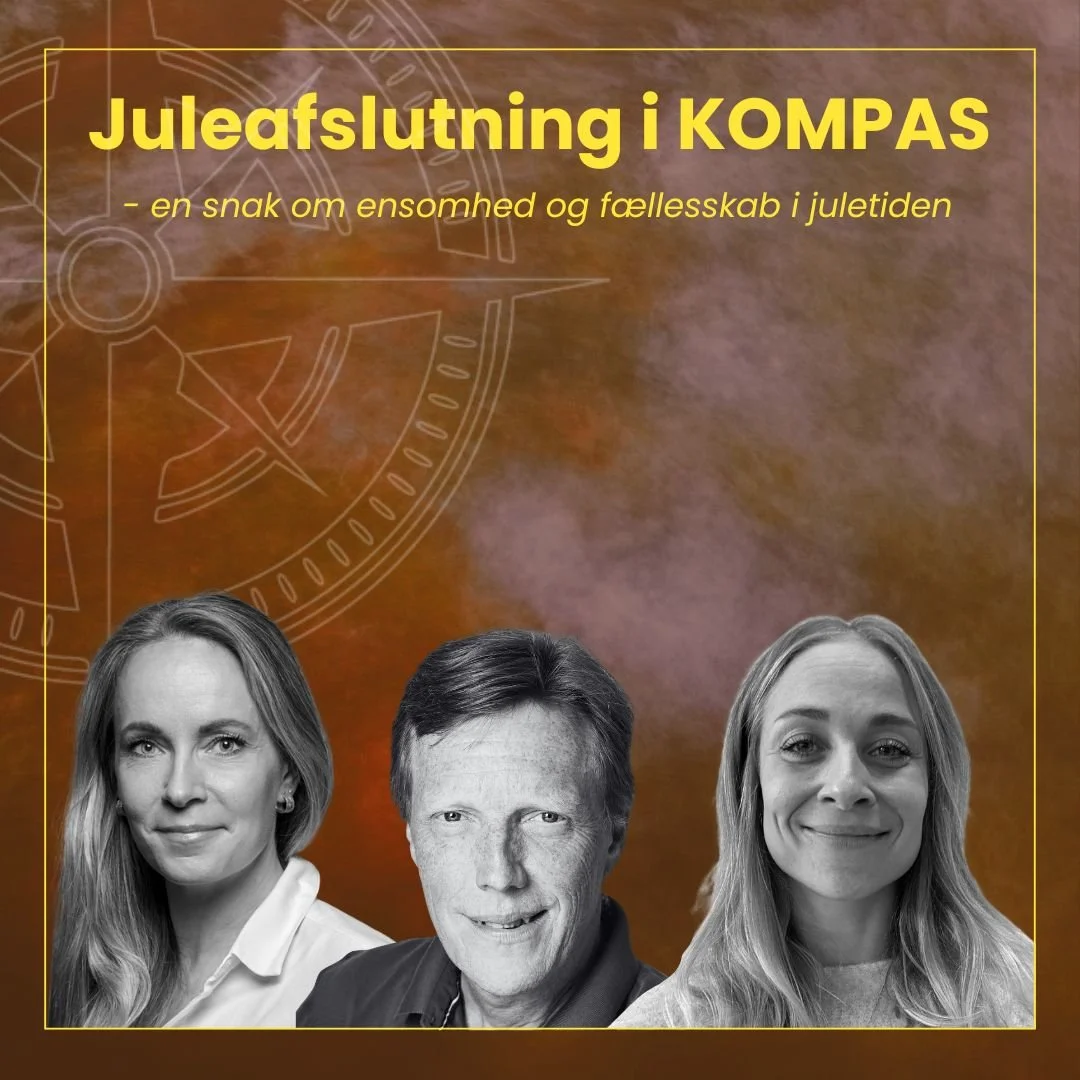
On a Wednesday evening in December, Vartov Church hosted an exciting conversation about the destructive opposite of community: loneliness.
The extent of loneliness among Danes is a huge problem, and the National Partnership Against Loneliness has set a goal of halving the number of lonely people by 2040. INVI is both impressed by the vision and curious about how it can be achieved. Can politics really make Danes less lonely?
The conversation covers a wide range of topics with the three loneliness experts: Julie Christiansen, loneliness researcher at SDU, David Vincent Nielsen, loneliness consultant at Ældresagen, and Simone Bodholdt, director at Ventilen.
"When children are asked to explain what loneliness is, they say it's when you don't have anyone to play with. And that basically applies to adults too: we don't have anyone to be with when we really need it," explains Simone Bodholdt, director of Ventilen, an organization that works to make young people less lonely.
"Among young people, being lonely is a huge taboo. It's actually easier for them to talk about unhappiness, stress, and depression, because when young people feel lonely, they don't feel like they've succeeded as human beings," she says.
Systemic changes are needed
But loneliness knows no age. And although there is a particular focus on loneliness among young people, loneliness also affects the older age group. Here, loneliness is mainly about the loss of close relationships that have accompanied a person throughout their life. But it is also about a society where it has simply become more difficult to maintain deep relationships throughout life.
David Vincent Nielsen is a loneliness consultant at Ældre Sagen (the Danish Association for the Elderly). In his view, making us less lonely requires a major societal change.
"We need to stop the loneliness machine that produces loneliness, and this has to be done at a systemic level. It is possible to make our society more relationship-friendly if we take an interest in the whole person ," he says.
The panel is completed by Julie Christiansen, who researches loneliness. She is also fighting to find solutions that can make people less lonely, but at the same time points out that it is difficult to conclude on the effects of various initiatives in this area.
"We need to make structural changes, but it is extremely difficult to measure how effective they actually are. That is why individual efforts are still extremely important," she says.
You can listen to the entire conversation from Vartov Church as a podcast in this week's Kompas.
At this wonderful live event, poems were also read by students from the Writers' School for Young People in Odsherred, and singer Dahlin filled the church with her song "Intercitylyn."
Kompas is produced by the INVI think tank – Institute for wicked , with support from the Carlsberg Foundation.